Science Games
Play Science Games in your browser, explore physics puzzles, lab logic, ecosystems, and space challenges. Learn by experimenting and having fun.

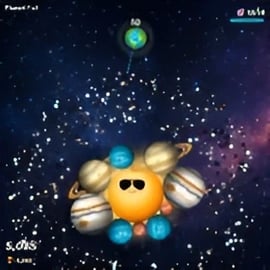


Science Games: Play, Experiment, and Learn in Your Browser
If you love curiosity-driven challenges, Science Games are built for you. This category blends puzzle-solving, discovery, and hands-on experimentation into quick, satisfying sessions you can play right in your browser. From physics playgrounds to biology-inspired strategy, these games turn big ideas into interactive moments that feel rewarding, approachable, and surprisingly practical.
Physics Puzzle Games and Motion Challenges
Physics-based Science Games invite you to think like an engineer, using momentum, gravity, friction, and energy to reach a goal. You might launch objects with a catapult, route a rolling ball through obstacles, or balance structures under shifting weight. The fun comes from testing hypotheses in real time: change an angle, add a support, reduce drag, and watch the outcome immediately. These games quietly teach scientific habits, observe patterns, isolate variables, and iterate. They also reward creativity, because multiple solutions often work. If you like clever shortcuts, physics puzzles are a great place to practice building efficient systems, using fewer parts, or completing levels with style constraints that push deeper understanding.
Chemistry and Lab Logic Games
Chemistry-themed Science Games focus on mixtures, reactions, and problem-solving with limited resources. Instead of memorizing formulas, you learn by doing: combine elements, match properties, and plan sequences so each step sets up the next. Many lab-style games turn the scientific method into gameplay, gather clues, form a theory, run a trial, then refine the approach. Good chemistry logic games also teach safety and planning as core mechanics, encouraging careful timing, smart inventory use, and clean organization of steps. If you enjoy puzzles that feel like a story of discovery, lab games are ideal, because every level is a small experiment with a clear question and a satisfying result.
Biology, Ecosystems, and Evolution Simulations
Biology and ecosystem Science Games explore how living systems change over time, often through surprising chain reactions. You might guide a food web, manage population growth, or adapt a species to new conditions by selecting traits and observing outcomes. These games reward long-term thinking: small decisions can ripple across the environment, affecting resources, competition, and survival. They are also excellent for players who like strategy without heavy complexity, because the rules are often intuitive, balance energy, manage scarcity, and maintain stability. When done well, biology games make concepts like adaptation, biodiversity, and ecological equilibrium feel concrete, not abstract, because you see the system respond to your choices.
Space, Astronomy, and Exploration Games
Astronomy-focused Science Games tap into the thrill of scale, distance, and discovery. You may plot orbits, plan efficient routes, and manage fuel or resources while exploring planets, moons, and star systems. The best space games make science feel like an adventure with real constraints: limited thrust, imperfect information, and the need for careful planning. They can also improve spatial reasoning, because you learn to anticipate trajectories and think in terms of systems rather than single moves. If you like goal-driven exploration with a sense of wonder, space and astronomy games are a natural fit, giving you a playful way to engage with topics like gravity assists, planetary motion, and the logic of mission design.
Engineering, Coding Logic, and Problem Solving
Engineering and coding-inspired Science Games emphasize systems thinking, building, testing, and optimizing. Some focus on circuits, where you connect components to create functioning machines. Others use programming logic, like sequences, conditionals, and loops, to automate tasks or solve puzzles efficiently. Even when no coding syntax is required, the mindset is similar: break a problem into smaller parts, create a repeatable process, and debug when something fails. These games are especially satisfying for players who love tinkering, because improvement is measurable. You can often refine a solution for speed, simplicity, or reliability, which mirrors how real engineers iterate from a prototype to a polished design.
However you like to play, Science Games make learning feel natural because experimentation is the core loop. Pick a subgenre that matches your mood, jump into a quick level, and let curiosity lead. Play in-browser, test ideas fast, and enjoy the satisfaction of figuring things out as you go.
FAQs about Science Games
What are the best gameplay tips for Science Games when I feel stuck?Try changing only one variable at a time, then observe the result. In physics and lab puzzles, small adjustments often reveal the underlying rule. If you are still stuck, aim for a simpler solution with fewer moving parts, because clean systems are easier to debug.
Can I play Science Games on mobile, tablet, and desktop?Most browser-based Science Games work well on modern phones, tablets, and computers. For the smoothest experience, use an updated browser and switch to landscape mode on mobile when a level requires precision dragging or fast taps.
Are Science Games suitable for kids, teens, and adults?Yes, this category spans many difficulty levels. Younger players often enjoy visual experiments and simple cause-and-effect puzzles, while teens and adults can dive into deeper simulations, optimization challenges, and strategy-driven science concepts.
How can I improve performance if a science simulation feels slow?Close extra tabs, refresh the page, and reduce background apps, especially on older devices. If the game offers settings, lowering effects or simulation detail can help. A stable internet connection also improves loading and prevents stutter in asset-heavy levels.
Which Science Games are best for learning concepts like physics, biology, or space?For physics, choose motion and construction puzzles that emphasize forces and balance. For biology, look for ecosystem management and evolution simulations that show feedback loops over time. For space, pick orbit planning and exploration games that reward route efficiency and resource management.