Okay is a minimalist puzzle game where a single move has to solve the entire level. Instead of juggling multiple actions or complex menus, you draw one clean line, launch a ball, and watch it bounce around the screen to clear every block. It’s a clever mix of minimalist puzzle game design and light physics, turning each stage into a tiny one-move brain teaser.
The concept is incredibly simple: you see a handful of shapes or blocks on a plain background, you decide on a direction and power for your shot, and then you let physics do the work. If the ball touches all the targets before it exits the screen or loses momentum, you win the level. If it misses even one, you reset and try a new angle.
Okay is perfect if you enjoy relaxing block breaker gameplay without the visual clutter. There’s no timer pressuring you, no complicated scoring system to track, and very little text. Just you, the board, some gentle sound effects, and a deceptively deep logic challenge. The further you go, the more the game nudges your spatial reasoning and planning skills, all while staying calm and low-stress.
Because it’s lightweight, abstract, and focused entirely on smart level design, Okay has become a favorite among players who want a quiet offline logic game they can open for a few minutes at a time—or sink hours into clearing level after level.
Okay is designed so anyone can understand it in seconds, but mastering its physics puzzle levels takes a bit more thought. Here’s how the basic rules and mechanics work when you play in the browser:
If even one block is left untouched, you restart and try a new trajectory. There’s no penalty for failing a level—no lives system, no energy meter—so you can experiment freely with different angles and power levels until the pattern clicks.
This simplicity is what makes Okay stand out as a one move brain teaser. The rules never really change, but the layouts do, forcing you to visualize increasingly complex paths in your head before committing to a shot. Bounces, ricochets, and narrow gaps become your tools for solving the puzzle.
Although Okay presents itself as a quiet, minimalist puzzle game, it hides surprising depth and charm. Here are some of the key features that define the experience:
Together, these features create a focused, satisfying puzzle experience that feels both modern and timeless. You’re not collecting skins, unlocking story beats, or grinding levels—just solving smart, tightly built physics puzzle levels at your own pace.
Okay began life as a mobile game, but the one-move puzzle format works just as well in a browser. On a gaming site, you’ll typically play Okay instantly from your web browser, with no download or sign-up required.
In a typical browser version:
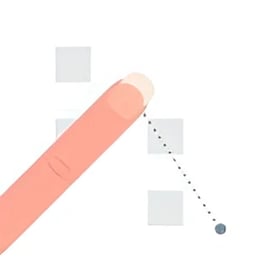
If you also enjoy playing on the go, Okay is available as a dedicated mobile app on major app stores. The core gameplay is the same: drag to aim, release to fire, and use clever angles to clear every shape in one glorious shot.
One of the big perks of Okay is how well it works as an offline logic game. Even in a browser environment, many implementations of Okay cache the game once it’s loaded, so you can keep playing if your connection becomes unstable or drops briefly.
In general:
Whether in the browser or on mobile, Okay is a reliable choice if you like puzzle titles you can enjoy on a plane, during a commute, or anywhere with weak connectivity. The self-contained design and one-move levels make it especially convenient for short offline sessions.
To really master Okay, you’ve got to do more than just drag and hope. The secret is learning how the ball will behave in advance—almost like tracing its path in your mind before you release. Here’s a step-by-step way to approach each puzzle:
Because you’re limited to a single move, the game becomes a sequence of little “aha!” moments. Each successful level feels like cracking a code: you suddenly see the correct line that makes everything fall into place. As levels become more layered and intricate, that feeling only gets more satisfying.
If you want to consistently beat tough levels in this minimalist puzzle game, a few practical habits will speed up your progress.
With a bit of patience and pattern recognition, you’ll find that even the hardest puzzles in Okay begin to feel fair and solvable. The game rewards clear thinking more than lightning-fast reactions.
What sets Okay apart from a typical arcade-style relaxing block breaker is its atmosphere. There’s no chaos, no on-screen explosions, and no rush. Every element is stripped down to its essentials so you can focus on the puzzle itself and unwind while you think.
The minimalist visuals—flat backgrounds, simple lines, and clean shapes—create a calm environment that doesn’t strain your eyes. Each block you hit often produces a soft, musical note, so as the ball bounces through its path, you hear a gentle, improvised melody. Difficult levels can feel like you’re composing a tiny song as you finally nail the perfect shot.
The physics are realistic enough to be predictable, but smooth enough to remain satisfying. Watching the ball arc, bounce, and weave through the layout can be oddly meditative, especially in longer levels that use lots of walls and edges.
If you enjoy logical challenges but dislike high-pressure games with timers and constant pop-ups, Okay delivers exactly the kind of slow-paced, mentally engaging relaxation you’re looking for.
Okay’s levels are carefully ordered to teach you concepts gradually. While the early stages are straightforward, the game steadily introduces more complex arrangements and physics interactions.
As you progress, you’ll notice that some setups behave like puzzles within puzzles. You might first need to navigate a narrow passage, then bounce from a specific wall to reach a lone block in the corner. These advanced layouts lean into the game’s identity as a true minimalist puzzle game that still packs a serious challenge.
Part of the charm comes from subtle surprises: unexpected routes that appear only after you observe a failed shot, or level designs that create recognizable patterns and shapes. Some stages hide little musical references or visual tricks, making the journey through the puzzle list feel fresh instead of repetitive.
Because there’s no fixed time limit, you can approach each new puzzle at your own pace, whether you’re quickly sweeping through several easy physics puzzle levels or taking your time to crack a single intricate layout.
If you’re searching for a puzzle game that fits into everyday life without demanding constant attention, Okay is an easy recommendation. It works wonderfully as an offline logic game, offers one move brain teaser challenges that feel fair and clever, and respects your time by avoiding aggressive monetization.
Here’s why it stands out:
Whether you’re a dedicated puzzle fan or just want a calm, focused distraction between tasks, Okay delivers a clean, satisfying experience built entirely around smart design. It’s a rare relaxing block breaker that values clarity and creativity over noise and clutter—making it a must-try for anyone who loves minimalist puzzle games.
A: Okay is a minimalist physics puzzle game where you drag to aim a ball and try to clear every block from the board in a single move.
A: Yes, Okay is free to play. Some versions let you optionally watch short ads for hints or choose to pay what you want to support the developer.
A: Yes. Once the game is loaded, you can play Okay offline, making it a great choice for travel or playing without Wi‑Fi.
A: Yes. Okay has simple controls, abstract visuals, and no violent content, making it family-friendly and suitable for most ages.
A: On tougher levels, experiment with different angles, use walls and blocks to bounce the ball, and make small aim adjustments until every block is hit.