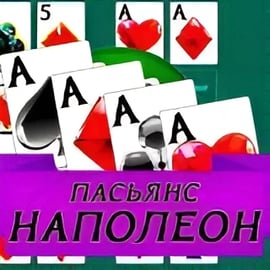
Napoleon Solitaire, also known as Napoleon at St. Helena or sometimes grouped with Forty Thieves, is a challenging two deck solitaire experience for players who enjoy deep strategy and a tough win rate. This classic patience card game uses two standard 52‑card decks shuffled together and laid out in a wide tableau that demands careful planning, not just luck of the draw.
In this online solitaire browser version, you can jump straight into the action without shuffling cards by hand or cleaning up after each deal. The game keeps the traditional feel of historic patience while adding modern conveniences like smooth animations, auto‑moves to foundations, and fast restarts. If you're looking for hard solitaire games that reward skillful play, Napoleon Solitaire is a great choice.
This guide explains how to play, the full rules and layout, how it differs from Forty Thieves, and practical tips for beating the odds. Whether you're new to classic patience or already a card‑game expert, you'll find everything you need to start winning more often.
Napoleon Solitaire can feel intimidating the first time you see all 104 cards on the table, but the basic flow is straightforward once you understand the structure. Here's the typical sequence of a game in your browser.
After you click or tap to start a new game, the online solitaire browser deals out the cards automatically:
Your main play area is the tableau, where you'll build cards down in suit and free up Aces to start foundation piles.
On each turn, you can perform several possible actions in any order:
You keep playing in this way until either all cards are moved to the foundations (you win) or you reach a dead end with no legal moves left (you lose).
Most implementations of Napoleon Solitaire support simple mouse or touch controls:
The game engine handles all the bookkeeping: legal move checking, scoring (if used), and win detection. You just focus on the puzzle.
To master this classic patience card game, you'll want a clear picture of how the rules work. Napoleon Solitaire looks similar to Forty Thieves, but each variant can have small rules tweaks. The following describes the standard, strict two‑deck solitaire rules most often used online.
The ultimate goal is simple but tough: build all eight foundations from Ace to King in their suits, using every card from the tableau, stock and waste. Because win odds hover around 1 in 10 for traditional rules, Napoleon Solitaire sits firmly among the more hard solitaire games, especially if you avoid undo.
Napoleon Solitaire doesn't have multiple modes or complicated scoring, so the focus stays on pure card play and smart decision‑making.
Your main objective is to:
A completed game means all 104 cards are stacked neatly on the foundations. The moment this happens, your online solitaire browser will register a win and often display stats such as time, moves, or streaks.
Even though the win condition is binary, players often set additional challenges:
These self‑imposed objectives keep the game engaging long after you've learned the basic forty thieves rules style of play.
Napoleon Solitaire is designed to run smoothly in any modern browser, but a few quick checks can help if you run into issues.
Because this is a lightweight card game, even older devices typically handle it well, making it a reliable choice for a quick strategy break.
Most versions of Napoleon Solitaire you'll find are built as online solitaire browser games and are meant to be played with an active internet connection. They load assets, ads, and save data through the web, so closing your connection mid‑session can interrupt play.
However, there are a few scenarios to consider:
If consistent offline access is critical, look for a downloadable or app‑based version. For quick, convenient play across different devices, the web‑based option remains the most flexible.
Playing Napoleon Solitaire online streamlines setup and makes experimenting with different strategies much easier than with physical cards.
Because the computer enforces legal moves based on classic forty thieves rules, you can learn by testing ideas. When a move isn't allowed, the game simply won't accept it, reinforcing correct patterns.
That convenience lets you focus entirely on planning moves, making online Napoleon Solitaire one of the most efficient ways to practice and master this demanding two deck solitaire puzzle.
Napoleon Solitaire belongs to the broader family of two‑deck patience games, where the volume of cards increases both the complexity and the satisfaction of a win.
These constraints are what make Napoleon Solitaire one of the more hard solitaire games. You don't have the flexibility of alternating colors like in Klondike, nor can you move sequences as in Spider. Each move must be carefully considered because recovering from an early mistake is often impossible.
With success rates often quoted around 10%, winning this classic patience card game consistently requires a strategic mindset. These tips can significantly improve your odds.
Your top priority early on is to free up as many buried cards as possible in the tableau. Moves that reveal new cards are usually stronger than moves that simply shuffle exposed cards around.
Because there's often no redeal, each card you draw from the stock represents one pass through the remaining deck. Before drawing, ask yourself:
Drawing too fast can bury useful cards in the waste pile where they might stay unreachable for the rest of the game.
An empty tableau column is powerful because any card can move into it. Use empty spaces to:
However, don't rush to fill every empty space. Sometimes it's better to keep one or two columns empty for flexibility in upcoming turns.
While moving cards to the foundations is your ultimate goal, moving them too early can cripple your ability to build within the tableau.
As a rule of thumb, it's usually safe to move Aces and low‑value cards up, but think twice about mid‑range cards you might still need.
Because both tableau and foundations are suit‑based, strong players mentally track which suits are “stuck.” If you see many Hearts buried deep and few in play, you'll know it's risky to lock away Heart connectors too early.
Over time, this awareness becomes instinctive and greatly improves your long‑term win rate in Napoleon‑style two deck solitaire.
Napoleon Solitaire is closely related to Forty Thieves, and some platforms even use the names interchangeably. Both are tough, methodical, two‑deck patience games that appeal to players who like a real challenge.
Depending on the ruleset your online solitaire browser uses, you may see some of these differences between a game labeled Napoleon at St. Helena and a game labeled Forty Thieves:
Always check the in‑game help or rules for your specific implementation. Even small differences—like allowing redeals or limiting what enters an empty column—can greatly alter the difficulty and strategy of this hard solitaire game.
One of the biggest advantages of playing Napoleon Solitaire online is how accessible it is.
This makes Napoleon Solitaire an ideal option when you want a serious, strategy‑heavy card challenge without committing to a large download or account signup.
As a traditional patience card game, Napoleon Solitaire is inherently family‑friendly. There's no graphic content, no chat, and no competitive pressure—just you versus the cards and your own decision‑making.
Because the core rules are simple but unforgiving, it's also a great mental workout, helping to sharpen planning, pattern recognition, and patience. And since it's playable on most desktops, laptops, tablets, and phones, you can enjoy this classic two deck solitaire almost anywhere you have a browser and an internet connection.
A: Napoleon Solitaire is a challenging two-deck patience card game where you build foundations from Ace to King while clearing cards from the tableau and stock.
A: You win by moving all cards to the foundation piles in ascending order by suit, from Ace up to King, using cards from the tableau and the stock wisely.
A: Yes, it is considered a difficult solitaire. Winning often requires careful planning, making room in tableau columns, and using stock cards efficiently.
A: Yes. You can play Napoleon Solitaire for free directly in your browser with no download or registration required on most solitaire sites.
A: Napoleon Solitaire uses the same basic idea as Forty Thieves—two decks, building foundations by suit—but some versions may change tableau size or move rules to adjust difficulty.